Strengthening your cyber resilience
Strengthening your cyber resilience
Cybersecurity is no longer just an IT issue. It is a business-critical priority. For C-suite/board members/senior leadership teams, the key question is not if a cyber threat will happen, but how well your organisation is prepared to handle it.
By 2025, 60% of organisations will use cybersecurity risk as a primary determinant in conducting third-party transactions and business engagements (Gartner). This shift highlights a growing reality, cyber resilience is now a core factor in business trust, reputation and growth.
The good news is that a strong, balanced approach built on three core pillars, people, process and technology, can significantly reduce risk and build long-term resilience.
People: Empowering your team to be cyber-smart
Your people are your first line of defence. Most cyber incidents stem from simple human error. With the right training and culture, your team becomes a powerful part of your security strategy.
Fewer costly mistakes and faster issue reporting can be achieved when staff feel empowered and informed. A culture of accountability and shared responsibility helps ensure that cybersecurity becomes part of everyday behaviour, not just a once-a-year training exercise.
Focus on:
- Delivering relevant, scenario-based training that reflects real-world threats.
- Making security part of onboarding and ongoing development and encouraging openness so issues are flagged early and dealt with quickly.
Process: Creating clarity and control
Strong processes ensure your organisation can respond quickly and effectively when threats arise. They bring structure, consistency and confidence, helping you and your team mitigate identified risks.
With clear governance and well-defined procedures, your teams can act decisively during incidents, reducing downtime and reputational damage. Regular reviews of access rights and permissions help prevent internal vulnerabilities by limiting unnecessary exposure to sensitive systems and data.
Separately, aligning access controls with recognised standards supports compliance and improves audit readiness, making it easier to demonstrate accountability and meet regulatory requirements.
Focus on:
- Developing and testing a practical incident response plan with clear roles and escalation paths.
- Reviewing access controls regularly, following the principle of least privilege especially during role changes or restructures.
- Aligning policies with recognised frameworks such as the government-backed Cyber Essentials scheme or the National Cyber Security Centre Cyber Assessment Framework.
Technology: Strengthening your digital defences
Technology provides the tools to protect your systems and data. But tools must be well chosen, properly configured and supported by people and process.
Early threat detection and robust data protection are key outcomes of a well-integrated technology stack. Scalable security ensures your defences grow with your business and emerging risks, without adding unnecessary complexity.
Focus on:
- Using layered security controls including firewalls, endpoint protection and email filtering.
- Keeping systems and software up to date with automated patching where possible.
- Monitoring activity using analytics to detect unusual behaviour and enable rapid response.
- Identity protection.
What this means for your organisation
Cybersecurity can feel complex, but it doesn’t have to be. By focusing on people, process and technology, organisations can take practical steps toward building a more resilient and confident approach to managing cyber risk.
This balanced strategy may help improve decision-making, strengthen stakeholder trust and support long-term business continuity, especially as cybersecurity becomes a growing factor in commercial relationships and operational planning.
How we can help
At Trident, we help organisations to protect their reputation, operations and future by embedding security into daily operations. Our goal is simple: to reduce your risk of cybercrime so you can focus on running your business.
We’ve supported the majority of our clients in achieving Cyber Essentials certification by making the process straightforward and integrating security into how teams work. But the real impact comes after certification. Through tailored training and ongoing support, we help people understand risks, spot threats and adopt secure behaviours, turning your workforce into an active line of defence.
Our partnerships go beyond compliance. We work with organisations to close their security gaps. Whether it’s upgrading legacy systems, improving endpoint protection or implementing secure cloud solutions, these changes strengthen your defences and reduce exposure to threats.

More News and Insights

Trident supports local charity food appeal
Team Trident recently came together to support The Clock Tower Sanctuary, donating food and essential items to help young people experiencing homelessness across Brighton & Hove. The Clock Tower Sanctuary is the only drop-in day centre in Brighton & Hove dedicated to supporting 16 to 25 year olds experiencing homelessness. Alongside practical support, the charity…

Trident Supports Hospice UK’s 2026 Technology Maturity Survey
Trident is proud to sponsor Hospice UK’s 2026 Technology Maturity Survey, reinforcing its commitment to supporting hospices with technology strategy, change and long-term planning. Technology is playing an increasingly important role in helping hospices operate efficiently, stay secure, support their workforce and plan for the future. Yet many organisations are balancing growing demands against limited…

A stronger foundation for cyber resilience: passkeys become the standard
Signing in is about to get a whole lot safer and simpler. With Microsoft retiring text and phone call authentication codes, here is why passkeys strengthen your defences and how to make the move with confidence. For years, passwords have been the weakest link in almost every organisation’s defences. That is now changing, and the…
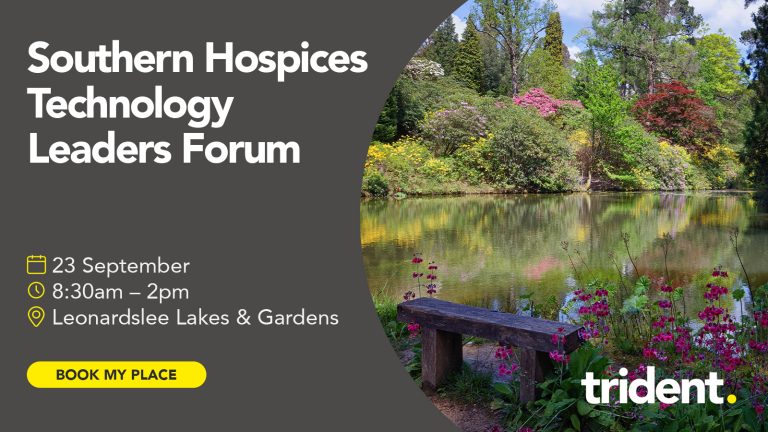
Southern Hospices Technology Leaders Forum
Hospices are being asked to do more with technology than ever, from tighter compliance and smarter ways of working to safer systems and a serious conversation around AI. It is a lot to navigate when budgets are tight and teams are stretched. The Southern Hospices Technology Leaders Forum brings together leaders from across the south…

Trident raises more than £2,000 for local homelessness charity
Eight members of the Trident team have successfully completed The Clock Tower Sanctuary’s annual half marathon hike from Lewes to Brighton, raising more than £2,000 to support young people experiencing homelessness across Brighton & Hove. Taking place on 11 July 2026 during sweltering temperatures, the challenge saw the team cover over 13 miles across the…
Webinar recording: A practical look at how SharePoint can strengthen internal communications for hospices
In many hospices, internal communications have grown organically over time. Policies are shared as email attachments, news goes out across multiple channels, and teams across clinical, fundraising and operations often have their own ways of storing and sharing information. This approach works in practice, but over time it can make it harder for people to…
Case study: Helping Southern Hospice Group navigate merger complexity with confidence in their IT
“Working with Trident gives reassurance which is important for me, for our board, and for our people here at Southern Hospice Group.” – Stuart Palma, Chief Executive Officer at Southern Hospice Group Confidence, clarity and continuity are critical during any merger. In this case study video, Southern Hospice Group shares how partnering with Trident helped…

How hospices are navigating technology change
Upcoming event: Southern Hospices Technology Leaders Forum 23 September 2026 | 8:30am – 2pm | Leonardslee Lakes & Gardens The Southern Hospices Technology Leaders Forum brings together leaders from across the south for a half-day event focused on the topics shaping hospice technology right now. Expect expert-led sessions on compliance, AI and cyber security, plus an…

Behind the Fortinet headlines: why now is the time to rethink remote access
Over the past few days, a large-scale campaign has emerged targeting Fortinet firewalls and SSL VPN services. Security researchers have identified almost 74,000 internet facing Fortinet devices that may be exposed, with attackers using stolen usernames and passwords to attempt access at scale. The headlines are focused on Fortinet, with organisations such as the…

Trident takes on charity hike to support young people experiencing homelessness
On 11 July, eight members of the Trident team will take on The Clock Tower Sanctuary’s annual half marathon hike from Lewes to Brighton, raising funds and awareness to support young people experiencing homelessness across Brighton and Hove. The team is aiming to raise £1,600 to help The Clock Tower Sanctuary continue providing vital support…