Why extended detection and response is the new standard for organisations
Why extended detection and response is the new standard for organisations
Modern organisations rely heavily on digital systems to support day‑to‑day operations. Cloud platforms, connected devices and integrated applications now play a central role in how teams communicate, collaborate and deliver services.
As a result, IT environments have become larger, more interconnected and constantly active. Systems generate continuous activity across users, devices, networks and cloud services, making it increasingly difficult to recognise when something unusual is taking place.
Monitoring and protection remain essential, providing the visibility and control organisations rely on day to day. However, as the threat landscape evolves, many organisations are recognising that visibility alone is no longer enough.
This is why Extended Detection and Response (XDR) is rapidly becoming the new standard. By connecting signals across the entire environment and enabling coordinated detection and response, XDR helps organisations identify threats earlier, respond faster, and reduce the risk of disruption in increasingly complex environments.
From visibility to continuous detection and response
Monitoring helps organisations understand how their environments normally behave. However, modern IT environments generate far more activity than traditional monitoring approaches were designed to interpret. The challenge is no longer collecting signals, but understanding what they mean in context.
As environments have grown more complex, organisations recognise that visibility remains essential, but it must now be supported by continuous detection and response across users, devices, networks and cloud services to maintain confidence, control and resilience. Endpoint-only detection was once sufficient, but modern attacks move rapidly across identity, cloud platforms and user activity, making isolated approaches increasingly difficult to rely on in practice.
This shift reflects the principles of XDR: bringing together signals from across the environment into a single, unified view. By correlating activity across systems in real time, it reveals patterns that would otherwise remain hidden, providing a more complete understanding of organisational risk.
This allows unusual behaviour to be identified earlier and addressed before it escalates into disruption. As attacks span multiple systems and environments, timely detection and effective response are becoming critical. Organisations increasingly need the ability to act on insights across their entire environment, making XDR a natural evolution in modern cyber security.
Supporting secure and resilient operations
When combined with continuous monitoring and response, XDR gives organisations confidence that unusual activity will be reviewed and addressed at any time, not only during working hours.
As cyber threats become more sophisticated and persistent, this kind of coordinated, cross-environment detection and response is no longer a “nice to have” but is becoming an essential operational capability.
XDR supports this shift by enabling continuous, specialist-led detection and response across the full attack surface, replacing fragmented alert handling with a more unified and coordinated approach.
For many organisations, maintaining this level of visibility, analysis and response internally can be difficult to sustain. Extending established monitoring with XDR-aligned capabilities provides a practical way to strengthen protection without increasing internal operational pressure.
Introducing Trident’s MPS Pro
At Trident, this evolution is delivered through MPS Pro.
Building on the strong foundations of our Monitoring and Protection Service, MPS Pro extends monitoring into continuous, extended detection and response – aligning with XDR principles to join the dots across modern IT environments and coordinate action across Trident’s Security team and Helpdesk as part of a single, orchestrated response.
With MPS Pro, you benefit from:
- Early identification of security incidents and unusual activity through cross environment correlation, enabling swift action
- Rapid investigation and 24/7 coordinated response involving the SOC, Trident’s Security team and Helpdesk, acting together rather than in isolation
- Fast, coordinated action to help prevent issues spreading across your business
- Clear visibility of what is happening across your systems, supported by a deeper understanding of how each client environment operates in practice
- Greater confidence that user activity is being actively protected, leading to faster decisions and better outcomes
MPS Pro helps stop a single compromised user from becoming a wider business problem, providing a critical layer of protection to keep your users and organisation secure.

More News and Insights

Empowering hospices with AI: Practical tools & live demos – webinar recording
Hospices are under constant pressure, balancing limited time, stretched resources, and growing demand. AI offers a helping hand to ease that burden: streamlining administrative tasks, saving time, and allowing staff to focus on what truly matters, delivering compassionate patient care. In this session, Louis Graham, Microsoft Copilot Specialist, shared how Microsoft Copilot is being used in…

Southern Hospice Group and St Catherine’s Hopsice – Client videos
Hear from Giles Tomsett, Chief Executive at St Catherine’s Hospice, and Stuart Palma, Chief Executive Officer at Southern Hospice Group, on challenges they face in the hospice sector, and how Trident has partnered with them to solve their IT challenges.

Empowering hospices with AI: Practical tools & live demos
Date: 9 December 2025 Time: 10am – 11am Where: Microsoft Teams webinar Hospices are under constant pressure, balancing limited time, stretched resources, and growing demand. AI offers a helping hand to ease that burden: streamlining administrative tasks, saving time, and allowing staff to focus on what truly matters, delivering compassionate patient care. In this session,…
Trident support Sussex Wildlife Trust as newest corporate member
We’re delighted to announce that we have recently become a corporate member of Sussex Wildlife Trust, a respected local charity formed in 1961, and is now the largest local organisation dedicated to protecting the wildlife and natural environment across Sussex. By joining as a corporate member, we’re supporting vital work that helps safeguard local habitats,…

We’re ISO-certified – A trusted supply chain starts with trusted partners
We’re pleased to share that following our latest independent surveillance audit, Trident continues to meet the internationally recognised standards of ISO 27001, a certification we’ve held since 2019. In today’s complex digital world, information security is more than a requirement, it’s a responsibility. Our ISO 27001 certification reflects our ongoing commitment to safeguarding our systems,…

Is your hospice’s Microsoft 365 setup secure enough?
Hospices face growing cybersecurity risks, often with limited internal IT capacity. Our services are designed to support your team with additional insight, helping you stay secure without adding pressure. To do this, we’ve developed a two-part security review service tailored specifically for hospices. Why two parts? Because securing Microsoft 365 isn’t just about getting the…
Trident raises over £1,000 in Dragon Boat challenge
This past Saturday, our team proudly took to the water at Tilgate Park for St Catherine’s Hospice‘s annual Dragon Boat Race! With paddles in hand and team spirit in full force, we joined 18 other teams in a series of races, each crew battling it out on the water with determination whilst being cheered on…

Turning Microsoft’s Windows 10 support extension into a strategic advantage for charities and education providers
Microsoft has confirmed that support for Windows 10 will officially end on 14 October 2025. To ease the transition, they’ve introduced an Extended Security Updates (ESU) program, available to all organisations for a fee, but offered free for one year to charities and education providers.
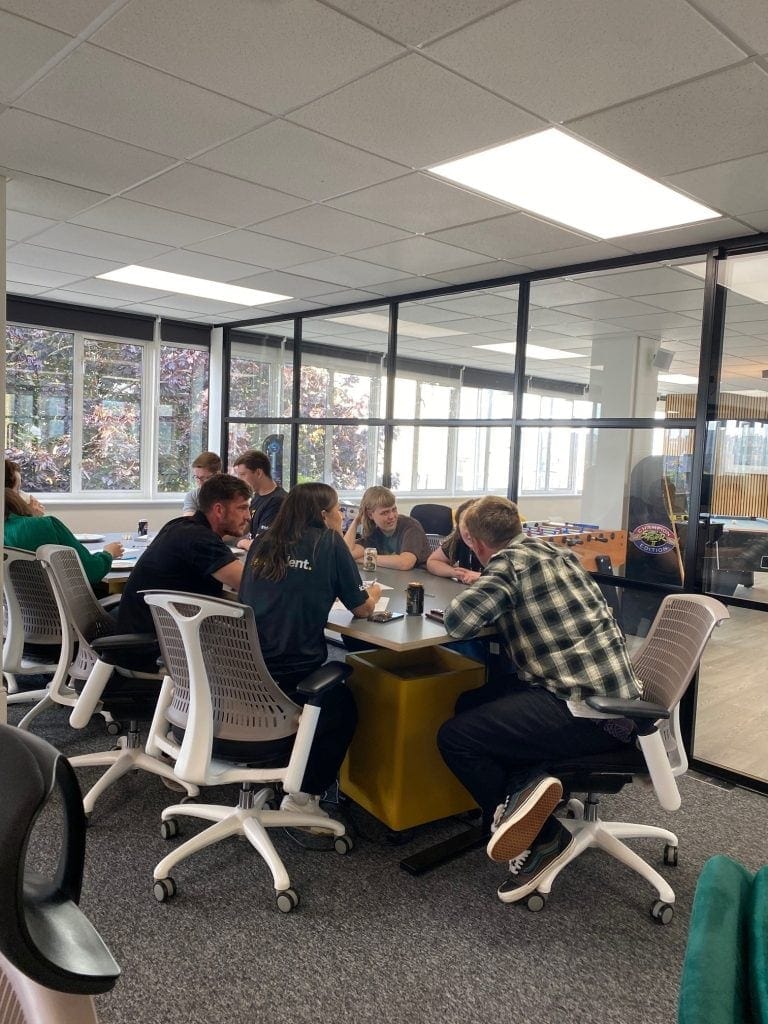
Quiz night raises funds for St Catherine’s Hospice
Yesterday, we hosted a fantastic fundraiser quiz night in support of our upcoming dragon boat race for St Catherine’s Hospice on 6th September – and what a night it was!
How a Microsoft 365 review helps streamline, scale and secure businesses
Trident offers a zero-cost, zero commitment review that assesses an organisation’s IT, focusing on the use of Microsoft 365.
- « Previous
- 1
- 2
- 3
- 4
- Next »