Why extended detection and response is the new standard for organisations
Why extended detection and response is the new standard for organisations
Modern organisations rely heavily on digital systems to support day‑to‑day operations. Cloud platforms, connected devices and integrated applications now play a central role in how teams communicate, collaborate and deliver services.
As a result, IT environments have become larger, more interconnected and constantly active. Systems generate continuous activity across users, devices, networks and cloud services, making it increasingly difficult to recognise when something unusual is taking place.
Monitoring and protection remain essential, providing the visibility and control organisations rely on day to day. However, as the threat landscape evolves, many organisations are recognising that visibility alone is no longer enough.
This is why Extended Detection and Response (XDR) is rapidly becoming the new standard. By connecting signals across the entire environment and enabling coordinated detection and response, XDR helps organisations identify threats earlier, respond faster, and reduce the risk of disruption in increasingly complex environments.
From visibility to continuous detection and response
Monitoring helps organisations understand how their environments normally behave. However, modern IT environments generate far more activity than traditional monitoring approaches were designed to interpret. The challenge is no longer collecting signals, but understanding what they mean in context.
As environments have grown more complex, organisations recognise that visibility remains essential, but it must now be supported by continuous detection and response across users, devices, networks and cloud services to maintain confidence, control and resilience. Endpoint-only detection was once sufficient, but modern attacks move rapidly across identity, cloud platforms and user activity, making isolated approaches increasingly difficult to rely on in practice.
This shift reflects the principles of XDR: bringing together signals from across the environment into a single, unified view. By correlating activity across systems in real time, it reveals patterns that would otherwise remain hidden, providing a more complete understanding of organisational risk.
This allows unusual behaviour to be identified earlier and addressed before it escalates into disruption. As attacks span multiple systems and environments, timely detection and effective response are becoming critical. Organisations increasingly need the ability to act on insights across their entire environment, making XDR a natural evolution in modern cyber security.
Supporting secure and resilient operations
When combined with continuous monitoring and response, XDR gives organisations confidence that unusual activity will be reviewed and addressed at any time, not only during working hours.
As cyber threats become more sophisticated and persistent, this kind of coordinated, cross-environment detection and response is no longer a “nice to have” but is becoming an essential operational capability.
XDR supports this shift by enabling continuous, specialist-led detection and response across the full attack surface, replacing fragmented alert handling with a more unified and coordinated approach.
For many organisations, maintaining this level of visibility, analysis and response internally can be difficult to sustain. Extending established monitoring with XDR-aligned capabilities provides a practical way to strengthen protection without increasing internal operational pressure.
Introducing Trident’s MPS Pro
At Trident, this evolution is delivered through MPS Pro.
Building on the strong foundations of our Monitoring and Protection Service, MPS Pro extends monitoring into continuous, extended detection and response – aligning with XDR principles to join the dots across modern IT environments and coordinate action across Trident’s Security team and Helpdesk as part of a single, orchestrated response.
With MPS Pro, you benefit from:
- Early identification of security incidents and unusual activity through cross environment correlation, enabling swift action
- Rapid investigation and 24/7 coordinated response involving the SOC, Trident’s Security team and Helpdesk, acting together rather than in isolation
- Fast, coordinated action to help prevent issues spreading across your business
- Clear visibility of what is happening across your systems, supported by a deeper understanding of how each client environment operates in practice
- Greater confidence that user activity is being actively protected, leading to faster decisions and better outcomes
MPS Pro helps stop a single compromised user from becoming a wider business problem, providing a critical layer of protection to keep your users and organisation secure.

More News and Insights

Trident supports local charity food appeal
Team Trident recently came together to support The Clock Tower Sanctuary, donating food and essential items to help young people experiencing homelessness across Brighton & Hove. The Clock Tower Sanctuary is the only drop-in day centre in Brighton & Hove dedicated to supporting 16 to 25 year olds experiencing homelessness. Alongside practical support, the charity…

Trident Supports Hospice UK’s 2026 Technology Maturity Survey
Trident is proud to sponsor Hospice UK’s 2026 Technology Maturity Survey, reinforcing its commitment to supporting hospices with technology strategy, change and long-term planning. Technology is playing an increasingly important role in helping hospices operate efficiently, stay secure, support their workforce and plan for the future. Yet many organisations are balancing growing demands against limited…

A stronger foundation for cyber resilience: passkeys become the standard
Signing in is about to get a whole lot safer and simpler. With Microsoft retiring text and phone call authentication codes, here is why passkeys strengthen your defences and how to make the move with confidence. For years, passwords have been the weakest link in almost every organisation’s defences. That is now changing, and the…
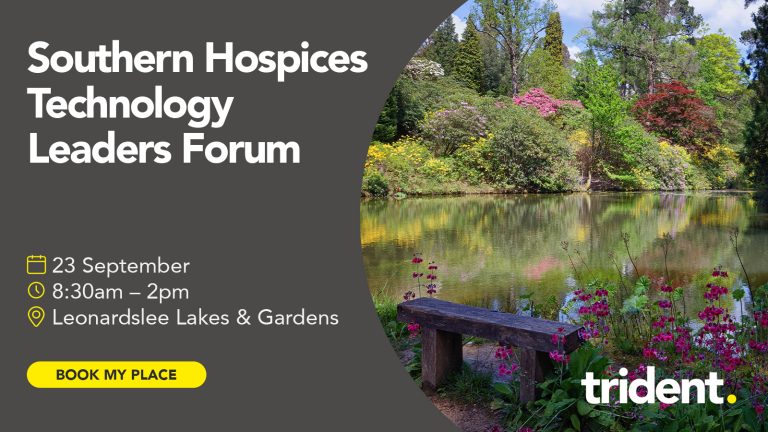
Southern Hospices Technology Leaders Forum
Hospices are being asked to do more with technology than ever, from tighter compliance and smarter ways of working to safer systems and a serious conversation around AI. It is a lot to navigate when budgets are tight and teams are stretched. The Southern Hospices Technology Leaders Forum brings together leaders from across the south…
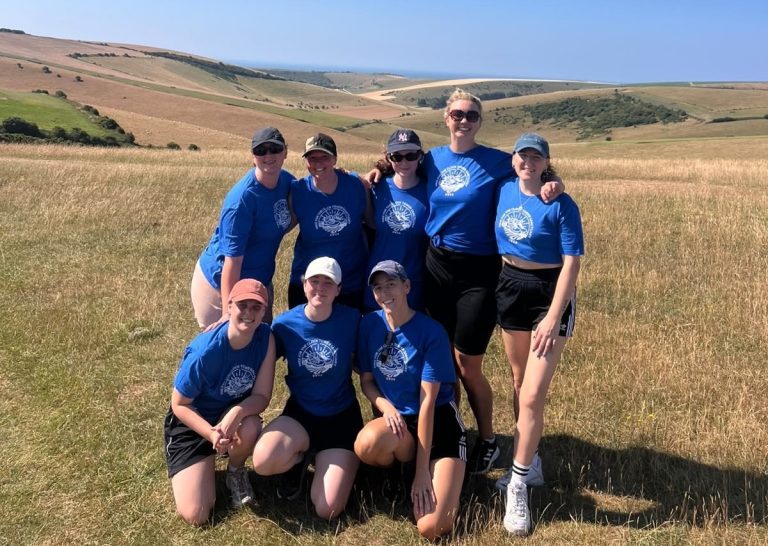
Trident raises more than £2,000 for local homelessness charity
Eight members of the Trident team have successfully completed The Clock Tower Sanctuary’s annual half marathon hike from Lewes to Brighton, raising more than £2,000 to support young people experiencing homelessness across Brighton & Hove. Taking place on 11 July 2026 during sweltering temperatures, the challenge saw the team cover over 13 miles across the…
Webinar recording: A practical look at how SharePoint can strengthen internal communications for hospices
In many hospices, internal communications have grown organically over time. Policies are shared as email attachments, news goes out across multiple channels, and teams across clinical, fundraising and operations often have their own ways of storing and sharing information. This approach works in practice, but over time it can make it harder for people to…
Case study: Helping Southern Hospice Group navigate merger complexity with confidence in their IT
“Working with Trident gives reassurance which is important for me, for our board, and for our people here at Southern Hospice Group.” – Stuart Palma, Chief Executive Officer at Southern Hospice Group Confidence, clarity and continuity are critical during any merger. In this case study video, Southern Hospice Group shares how partnering with Trident helped…

How hospices are navigating technology change
Upcoming event: Southern Hospices Technology Leaders Forum 23 September 2026 | 8:30am – 2pm | Leonardslee Lakes & Gardens The Southern Hospices Technology Leaders Forum brings together leaders from across the south for a half-day event focused on the topics shaping hospice technology right now. Expect expert-led sessions on compliance, AI and cyber security, plus an…

Behind the Fortinet headlines: why now is the time to rethink remote access
Over the past few days, a large-scale campaign has emerged targeting Fortinet firewalls and SSL VPN services. Security researchers have identified almost 74,000 internet facing Fortinet devices that may be exposed, with attackers using stolen usernames and passwords to attempt access at scale. The headlines are focused on Fortinet, with organisations such as the…

Trident takes on charity hike to support young people experiencing homelessness
On 11 July, eight members of the Trident team will take on The Clock Tower Sanctuary’s annual half marathon hike from Lewes to Brighton, raising funds and awareness to support young people experiencing homelessness across Brighton and Hove. The team is aiming to raise £1,600 to help The Clock Tower Sanctuary continue providing vital support…